
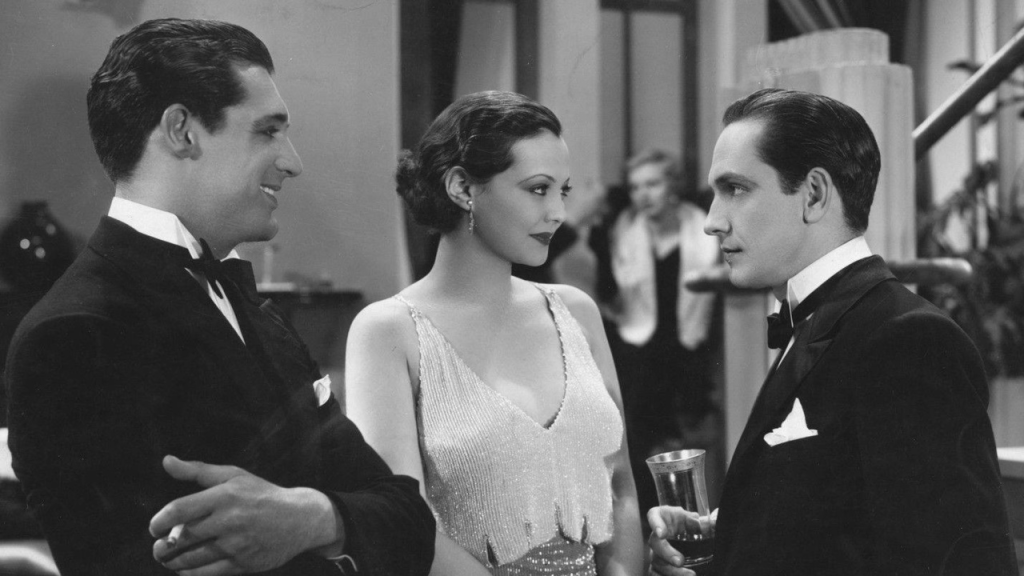
“Gentleman, I give you the holy state of matrimony. Modern style. Single lives, twin beds, and triple bromides in the morning” – Sylvia Sidney as Joan Prentice
Merrily We Go to Hell (1932) follows Joan Prentice (played by Sylvia Sidney) through her romance and eventual doomed marriage to journalist, hopeful playwright, and pathetic drunk Jerry Corbett (played by Frederic March). The film was directed by Dorothy Arzner, the most prominent female director of Hollywood’s Studio Era – and the only woman in that era to direct for a big-four studio.
The thing that is so refreshing about this film and some other pre-code films – such as The Scarlet Empress (1934) – is that in comparison to most Golden-Age Hollywood films (and many modern films) the women retain agency – sexual or otherwise – within their relationships. It is an agency that could only come from having something that somehow still often remains elusive today: a genuine understanding of and empathetical connection with a female protagonist (what could perhaps be called a ‘female gaze’).
Given the very brief synopsis of the film I just gave, the above may sound strange. But while Joan is repeatedly let down and suffers from Jerry’s drunken uncaringness, she makes significant decisions at each pivotal point of their relationship: to stay, to allow Jerry the chance to alter his behaviour of his own accord (not hers), to alter the foundation of their relationship to suit her needs, and lastly to leave.
To stay is the least interesting and most conventional of the decisions. Joan chooses to stay with Jerry through his initial drunken disorderliness. This follows the classic archetype of the beauty staying with the loveable buffoon. In this case, however, the film does its best to remove ‘loveable’ from the equation. Jerry’s repeated transgressions amount to a fairly irredeemable character. His catchphrase, “merrily we go to hell”, succinctly illustrates his disconnected indifference and fatalism that threatens to drag Joan down with him.
Where Joan’s decisions become of interest is in the latter third of the film. Joan, comprehending that Jerry has fallen back into a tumultuous affection for his ex-partner directly confronts him. Upon confirmation that he was about to leave the house to visit hers and start the affair, Joan challenges him to leave. Jerry, taken aback by this reaction, insists that if she loves him she would beg him to stay.
And in many other stories she would beg – it would be her role as wife to keep the house together. But she doesn’t. Instead, she opens the door, inviting him to leave. If she begged, she would be dissolving her agency and submitting herself fully to Jerry’s fatalism – admitting either to a fault of her own, or agreeing that there are powerful forces such as Jerry’s desire that cannot be acted against. Instead, she gives him a choice, and makes her choice known. He himself must choose to either stay or go, but she chooses not to be debased by the suggestion that the existence of this choice is in anyway her fault, or hers to make on his behalf.
This leads to the most contextually transgressive element of the film: Joan’s decision to herself engage in extra-marital affairs, or what she calls a “modern marriage”. Upon Jerry coming back from his dalliance with his ex, Joan says that if he gets to have the benefits of a modern marriage, she should too. Starting with the intent to spark jealousy, but then out of what is presented as genuine enjoyment and exuberance, Joan herself commences extramarital relationships. Instead of becoming the victim of her husband’s infidelity, she comprehends that she must herself act, navigate, and in the process, self-determine the boundaries of their relationship. It isn’t Jerry’s carelessness that delineates the margins of their marriage, it is Joan’s decision to act and maintain her agency.
This lifestyle comes crashing down upon Joan discovering that she is pregnant. In turn, she makes her last significant decision for the film: to leave. Jerry, returning home from a night out with a large party, is unable to fulfill the ‘marriage’ portion of the modern marriage, as even though Joan repeatedly notes that she has something desperately important to tell him, he never listens and prioritises his guests. Joan, deciding that maintaining any relationship with Jerry is too troublesome – no matter how ‘modern’ – leaves to move back in with her father. Confronting him, she lets him know that she is sick of sustaining and negotiating their relationship by herself. Joan makes the active decision to break their vows, and prioritise herself and her incoming child – something that was positively radical for a depression-era U.S.
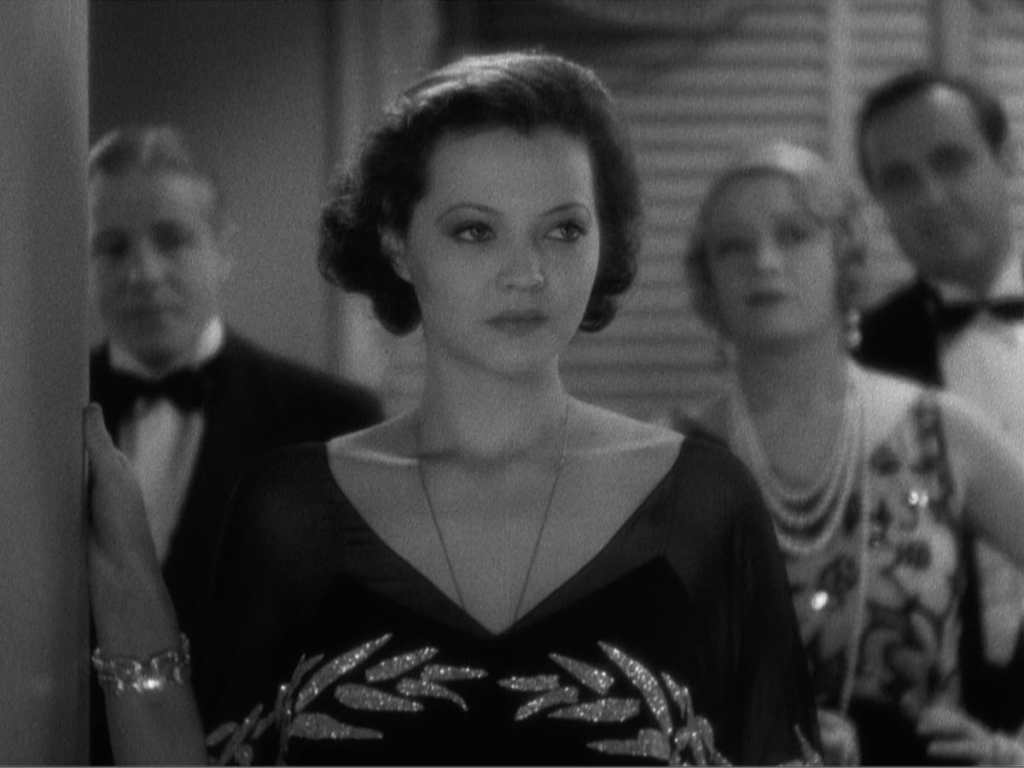
While there are many socially transgressive elements to the film’s plot, the ending is conventional in a way that feels abrupt, and out of place. The film ends with Joan, in hospital and in a stupor after a traumatic miscarriage, accepting a reformed Jerry back into her life. This ending doesn’t quite fit the messaging of the rest of the film, but perhaps could be understood as a product of the context of the film’s production.
Firstly, it was a film produced by Paramount – one of the dominant big-four studios of Hollywood’s Studio Era. As such, happy endings were an expectation, and often mandated.
Secondly, this film came out two-years before the introduction of the Hays Code, and thus was likely affected by Hollywood’s trajectory towards a highly censored film industry. The result of virulent protesting by the same conservative Christian women’s groups that brought about prohibition, the Hays Code was a self-imposed set of guidelines intended to ensure the morality of films produced in Hollywood.
The Hays Code prohibited the production of sexually-suggestive or immoral content that broke with conservative values. Marriages had to be maintained and couples had to sleep in separate beds. Dances could not be too sexually suggestive, and women could not show inner thigh or too much skin. Violence had to be kept to a minimum, and dialogue had to be chaste. There were racially specific clauses too: depicting miscegenation was prohibited, as was depictions of white slavery. Good guys had to win, and bad guys (anyone who broke with traditional moral values) had to be punished by the end of the film.
And yet, even with this context to the films production, Dorothy Arzner and Slyvia Sidney brought to life an utterly transgressive character in Joan. In her decisions throughout the film, Joan herself acts against traditional values in favour of those she can decide for herself.
The Hollywood Golden Age was dramatically affected by the Hays Code. It helped inadvertently helped produce the prominence of film noir femme fatales – women who, due to their sexual and traditionally immoral behaviour, had to be punished by a film’s end (usually by being brutally murdered).
This lineage of censorship of ‘troublesome’ female characters can somewhat be seen in its naissance in the closing moments of Merrily We Go To Hell and Joan’s traumatic miscarriage. This closing scene is abrupt, and unlike the rest of the film insofar as there is little-to-no narrative planting that Joan’s miscarriage and forgiveness of Jerry would be the payoff to. It seems, in a functional sense, to exist merely to show some kind of punishment (or negative recourse) for Joan’s embrace of the modern marriage, and to assuage any audience concerns that the status-quo of heterosexual monogamous marriage would not be returned to.
Joan – in a cosmic sense – being punished for her actions is particularly incongruent with the rest of the film insofar as Joan has been the protagonist – the primary character with which the audience is positioned to identify with. In the case of femme fatales, the audience was never positioned to identify with them – even if audiences at the time or later did. Instead, femme fatales were alluring figures to be viewed and not identified with – objectified manifestations of cultural fascinations with the ‘dangers’ of feminine sexuality, yet also a means to re-assert traditional moral values through the femme fatale’s punishment and destruction. I cannot say with certainty, but the climax of the film and Joan’s punishment certainly seems like a result of the stern traditional moralism that would fully take effect with the Hays Code, and perhaps not a result of Arzner’s vision of the story.
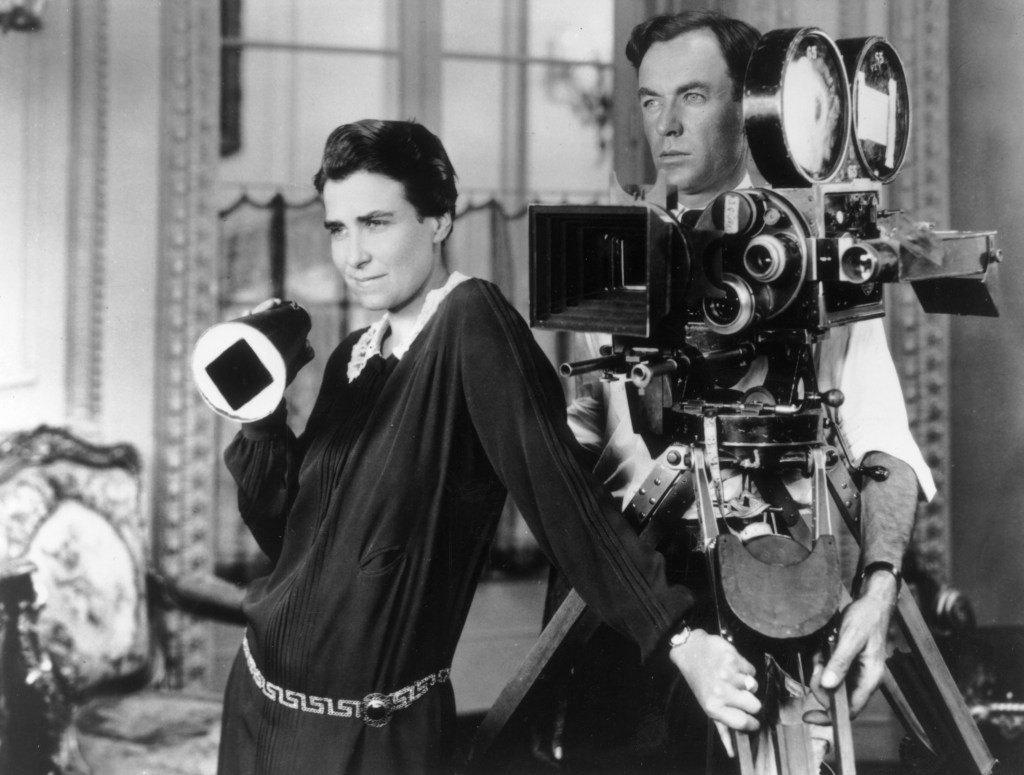
The Hays Code, as well as post-World-War-Two conservativism, dramatically changed the structure of Hollywood out of director Dorothy Arzner’s favour.
Arzner’s last film came in 1943. Even though she was a proven box-office success, she was forced out of the industry in favour of male directors. As she noted in interviews late in her life, at that time if a man wanted the job, it would be given to them over her regardless of talent of talent or history. She was also an out and proud lesbian, something that brought its own challenges and was in contradiction to the conservative, post-war nuclear family ideals of the late-1940s and 1950s.
Arzner’s forced exit from the film industry was tragic, unjust, and to the moral and aesthetic detriment of Hollywood’s Golden Age. But Arzner’s shortened career was still so impactful and important. As noted by Cari Beauchamp in a video essay for Criterion on Arzner, her films were later rediscovered by feminist film theorists in the 1970’s and made a huge impact. She later received deserved praise for creating sneakily transgressive films that interrogated relationships between women, and championed female solidarity and interconnectivity. Furthermore, she later became a lecturer at UCLA, in turn, acting as the teacher and mentor to many prominent west-coast filmmakers – most notably Francis Ford Coppola.
For me, Merrily We Go To Hell stands as one of my favourite Studio Era films, in large part due to the character of Joan. In her fantastically realised self-determination, and her positioning as one who is not acted upon but acts, Joan is an utterly compelling character, and a fascinating look into the socially transgressive films of pre-Hays Code Hollywood filmmaking.

 No One's Opinion
Leave a comment